



“Personal Confessions and Reflections Ahead of Hajj Journey”
-
“Personal Reflections Ahead of Hajj: A Journey of Faith and Self-Discovery”
-
“From Doubt to Devotion: A Life-Shaping Journey Before Hajj”
-
“A Tale of Faith, Doubt, and Redemption: A Hajj Confession”
-
“Hajj Pilgrim’s Confession: Struggles with Faith and the Road to Spirituality”
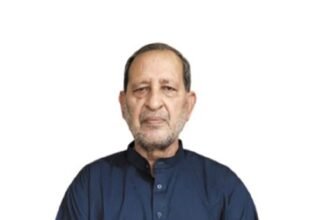
On October 8th, I am set to embark on my pilgrimage to the Holy Land to fulfill the sacred duty of Hajj. I kindly request your prayers that I may successfully perform this obligation. I also wish to share some personal confessions, revelations, and grievances, for which there could be no better moment than this.
I grew up in an intensely religious family, where, like millions of Muslims, our connection to faith was driven by devotion rather than rationalism. We were a strictly Deobandi household, and my mother, who belonged to a prominent religious family, was the reason behind our deep reverence for religion.
My father, however, was not as religious—he would pray and observe fasting, but that was about it. His business, once worth millions, collapsed overnight, and gradually poverty took root in our home. Yet, we maintained a façade of respectability, which was more about maintaining appearances.
Even as a child, I developed a strong aversion to worldly affairs. I had a grievance against God, wondering why this had to happen to us. I was in seventh grade at the time. By the time I reached eleventh grade, studying at Government College Lahore, I began to grow irritated by the blind devotion often associated with religion.
This was around the time when Zulfikar Ali Bhutto appeared on the political scene, and I was introduced to the concept of socialism. Although I had only a surface-level understanding of it, my inclination remained towards religion.
In my first year at Nishtar Medical College, I became involved with the “Tablighi Jamaat.” In my second year, while at the mosque of Peshawar University, an elder member of the Jamaat, a doctor, began caressing my hands and thighs in front of everyone, under the guise of “Muslim respect.” It was the first time I felt repulsion in such a situation.
Before this, I had witnessed inappropriate behavior in mosques, but this was the first time I had personally experienced it. Out of fear and disgust, I left the mosque and returned later that night to sleep discreetly.
On our way back, our wagon fell into a ditch near Gujar Khan. Despite being in the front seat, I remained unscathed. However, when I tried to break the window with my elbow, some hot liquid splashed on my face.
Battery acid had entered my eyes, and I spent several months in a strange state of blindness, low vision, and dazzling brightness. This incident triggered my doubts about religion and God. I stopped praying altogether.
After a particular incident, I attempted suicide, leaving behind a note that read, “I am ending my own life, not God.” Thanks to two dear friends, one of whom later committed suicide and the other recently passed away, I was saved by the doctors’ efforts.
It was evident that Allah had spared my life. However, this embarrassment only made me more stubborn, and I became an opponent of religion, leaning more towards supporting labor rights. Despite all this, I swear I never once disrespected religion or its figures, nor did I even consider it.
I understood the relationship between humans and divinity as a personal matter, which is probably why some remnants of faith remained within me. Over time, I relied on knowledge, reason, and rationality, while also indulging in worldly pleasures.
Then came May 9, 1999. I was in Moscow when someone attacked me from behind, striking my head. My skull was fractured in three places, and blood seeped into my spinal cord. The doctors said I could die within 24 hours, but I was certain I wouldn’t.
During my unconscious state, I had a revelation. I began studying metaphysics and cosmology and even completed a course in parapsychology. I left Russia and moved to the United States.
Psychologists often say that a severe head injury can draw a person towards spirituality, but I felt no such inclination. However, I did come to understand that there is indeed something beyond consciousness.
While living in the U.S., I started to gradually return to religion. Believe it or not, former U.S. President George W. Bush played a major role in my full return to faith when he maligned our civilization after the events of 9/11.
Islam, even if not viewed solely as a religion, is an integral part of our cultural heritage. Bush had challenged our culture. Being as extreme in my opinions as my family, I swung to the other side completely. My indulgence in worldly pleasures ceased. Though I didn’t become a cleric, I started regularly praying and fasting.
Now, a new problem has arisen. My circle of friends remains vast, but I only connect with those who, like me, consider themselves enlightened. However, I’ve become alienated from them, as I can no longer share many of their thoughts, nor can I participate in their gatherings, which often consist of more than just idle chatter. Nor can I act as a moral overseer.
At first, they thought I was going through a temporary phase, but as the years passed, they distanced themselves and began labeling me as a cleric, madman, or someone with a deranged mind. I cannot get along with people who see religion solely as devotion and react strongly to any critical inquiry.
Then there are those who observe religious practices yet continue worldly wrongdoings. I fail to understand how they expect Allah, the Most Merciful, to forgive their bad deeds simply because of a few good acts.
As I prepare for Hajj, I recognize the inner turmoil of my thoughts. While others may be devout in their faith, I struggle with my own doubts.
I request that you pray for me and also for the Taliban. Not as a political group, but as representatives of a mindset that lacks understanding of reason, tolerance, and interfaith unity. Let us pray that they embrace humanity and human compassion, the true essence of any religion.